
Cost of Living in the Netherlands for International Students (2026)
An accurate, itemized financial blueprint breaking down monthly student accommodations, utility expenses, grocery shopping, healthcare, and city comparisons.
1. 2026 Student Financial Realities in the Netherlands
Budgeting realistically for the cost of living in the netherlands for international students is essential for a rewarding study abroad experience. The Netherlands offers a high standard of living, clean public infrastructure, and reliable student support services. In 2026, international candidates must satisfy statutory maintenance criteria verified by the Immigration and Naturalisation Service (IND), which requires students to demonstrate adequate living funds alongside course tuition fees.
On average, the realistic cost of living in the netherlands for international students ranges between €1,100 and €1,550 per month. This expenditure varies depending on your university city, personal lifestyle choices, and housing arrangements.
2. Student Accommodation & Utilities: The Largest Expense
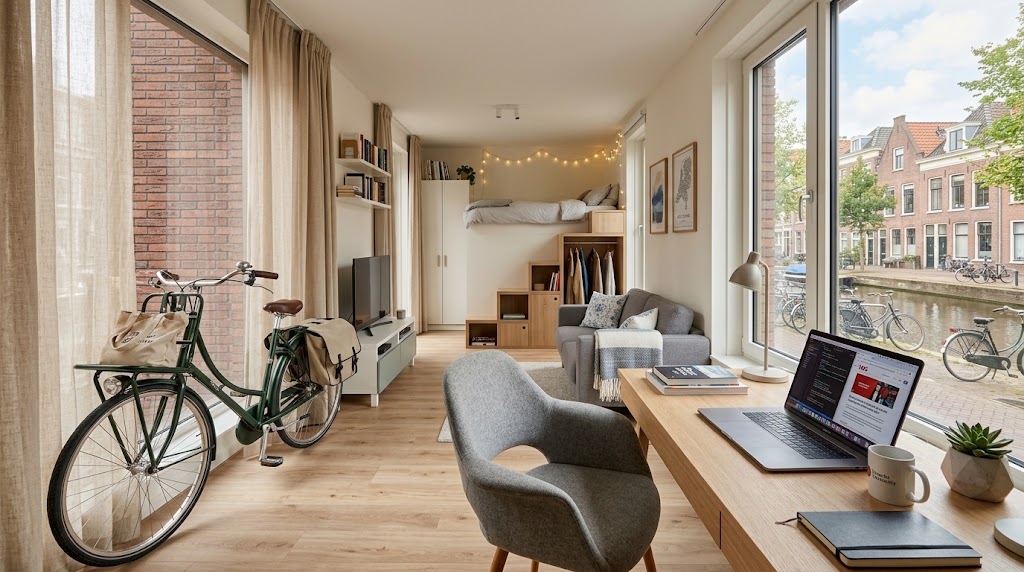
Accommodation represents the largest expenditure in the monthly budget. Across major academic hubs—such as Amsterdam, Utrecht, Rotterdam, and Groningen—student housing experiences high demand. Securing accommodations early through specialized platforms (like ROOM.nl, SSH, or university-allocated quotas) is critical.
In 2026, standard student room rents in shared flats range from €550 to €800 per month, inclusive of basic utilities (heating, water, electricity, and high-speed Wi-Fi). Self-contained private student studios generally range between €850 and €1,150 per month. Students renting independent studio apartments with individual front doors may qualify for the statutory Dutch Housing Allowance (Huurtoeslag), a government subsidy that can significantly offset monthly living expenses for qualifying low-income residents.
3. Food, Dining & Daily Grocery Budgets
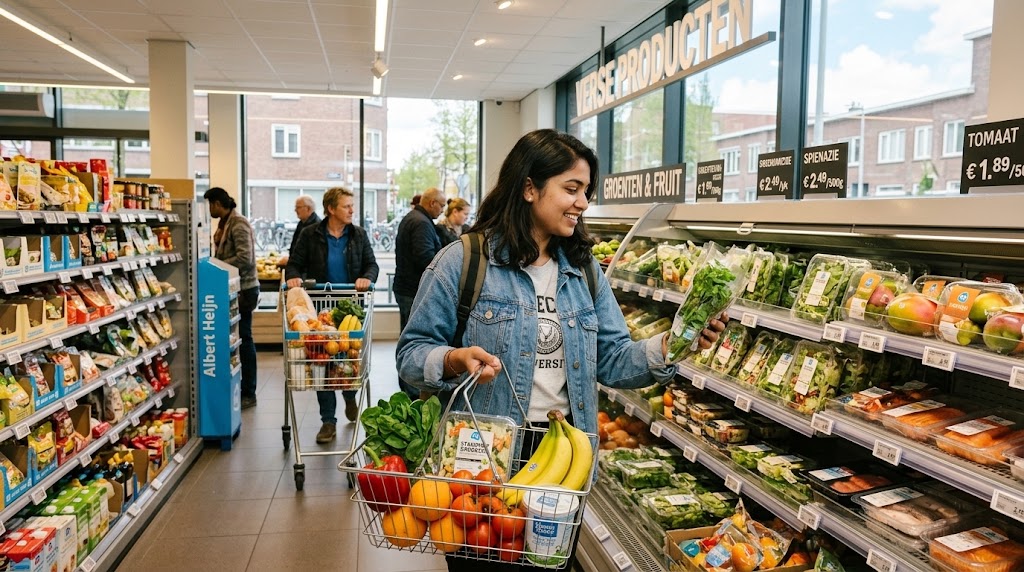
Food expenditure represents another core element of the cost of living in the netherlands for international students. Preparing home-cooked meals by shopping at affordable grocery chains like Lidl, Aldi, and Dirk, complemented by open-air weekly municipal markets, allows students to maintain a healthy food budget of €220 to €320 monthly.
Mid-tier supermarkets such as Albert Heijn and Jumbo offer convenience with slightly higher pricing. Dining out occasionally at university canteens (Mensa) or neighborhood cafes typically costs €12 to €22 per meal, making home cooking the most practical everyday choice for student budgeting.
4. Mandatory Health & Liability Insurance
Every individual residing in the Netherlands is legally required to hold health insurance coverage. International students who are purely studying can purchase tailored international student packages (such as Aon Student Insurance or Swisscare), costing approximately €45 to €70 per month.
However, international students who engage in permitted part-time work (up to 16 hours per week under Dutch labor regulations) must transition to statutory Dutch basic health insurance (Basisverzekering), which costs approximately €135 to €150 monthly. Working students can apply for the Healthcare Allowance (Zorgtoeslag), an official tax benefit from the Dutch Tax Administration (Belastingdienst) that covers a substantial portion of this statutory insurance cost.
5. Bicycle Upkeep & Public Transit Costs
Urban transportation expenses can be kept remarkably low by adopting local cycling habits. Purchasing a dependable second-hand bicycle (typically costing €70 to €110 one-off) or using bicycle subscription services (such as Swapfiets for €19/month) eliminates daily commuting transit fees entirely.
For intercity weekend travel, Nederlandse Spoorwegen (NS) offers monthly off-peak rail discount subscriptions (Dal Voordeel) for approximately €5.60 per month, granting 40% discounts on train travel outside morning and evening rush hours.
6. Itemized Monthly Expense Ledger (2026 Standards)
Comprehensive breakdown of average monthly student expenditures in the Netherlands:
| Cost Category | Estimated Monthly Range (2026) | Budget Optimization Tip |
|---|---|---|
| Housing (Shared / Studio) | €550 – €950 | Apply for university housing queues at earliest eligibility. |
| Groceries & Cooking | €220 – €320 | Shop at weekly open-air street markets for fresh produce. |
| Health & Personal Insurance | €50 – €145 | Apply for Zorgtoeslag health subsidy if working part-time. |
| Transport (Bicycle & Rail) | €40 – €90 | Ride a bicycle locally and use off-peak train discounts. |
| SIM Card & Mobile Data | €15 – €25 | Select flexible SIM-only unlimited data contracts. |
| Books & Academic Materials | €35 – €70 | Access digital library databases and secondhand book networks. |
| Leisure & Social Activities | €120 – €200 | Take advantage of student discount cards (ESN Card). |
| Total Estimated Budget | €1,030 – €1,800 | Matches the official 2026 IND financial maintenance baseline. |
Plan Your Study Journey with Experienced Advisors
Carefully managing the cost of living in the netherlands for international students ensures a secure, stress-free educational experience. Aligning your budget with realistic Dutch municipal figures prevents unexpected financial strain during your studies.
Operating under registered Dutch business entity Avid Student Services (KvK: 87853329), our dedicated consultants at Avid Immigration Group provide authentic university representation, document guidance, and housing advice. Contact our Dutch headquarters today to initiate your customized educational evaluation.