
Best Guide to Netherlands Economy and Business in 2026
An exhaustive macroeconomic overview examining corporate stability, logistics corridors, foreign direct investment, and professional career pathways.
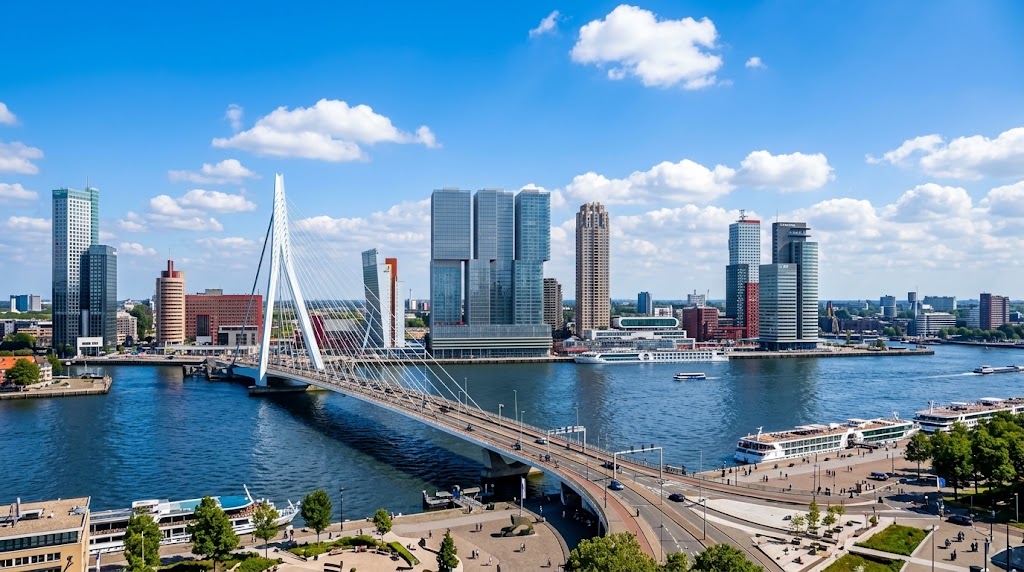
1. Macroeconomic Stability in 2026
Understanding the fundamentals of the netherlands economy and business environment is essential for international scholars and ambitious professionals aiming to build viable careers in Europe. In 2026, the Netherlands continues to be recognized as one of the most open, transparent, and resilient economies in the world. As documented by the official European economic reviews from the Eurostat Statistical Office, the nation consistently ranks within the European Union's top tier by gross domestic product per capita.
The structural strength of the netherlands economy and business ecosystem relies on the renowned "Polder Model." This pragmatic tripartite consensus between labor unions, employer federations, and government bodies maintains workplace stability, minimizes labor strikes, and ensures steady, predictable wage increases. Supported by an impeccable AAA credit rating from leading international credit agencies, the country offers exceptional safety for educational investments and corporate initiatives alike.
2. Rotterdam & European Logistics Infrastructure
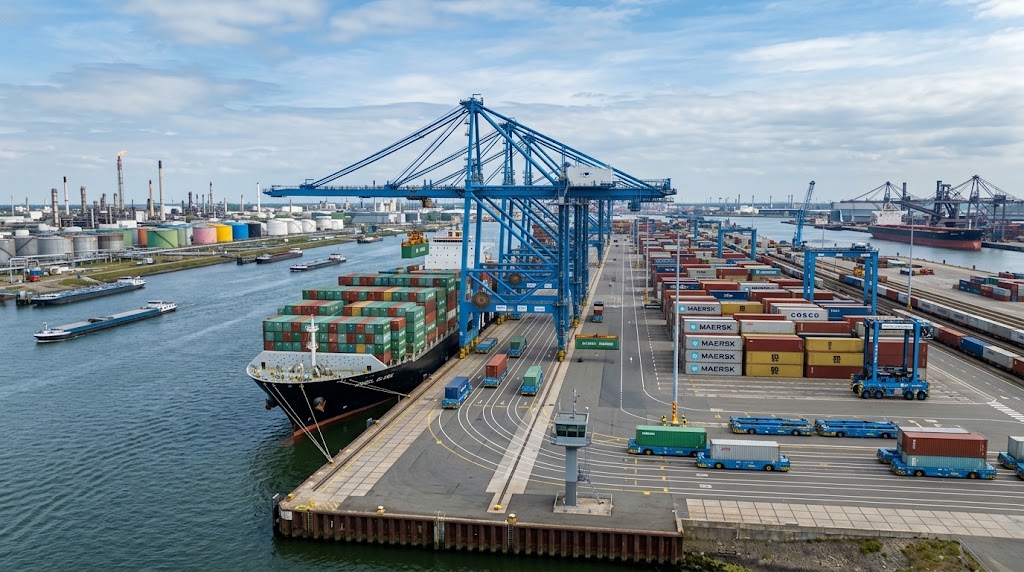
Often heralded as the commercial gateway to Europe, the country's strategic geographical location on the North Sea estuary provides unmatched commercial reach. The Port of Rotterdam stands as Europe’s largest maritime logistical hub, handling over 440 million metric tons of commercial cargo annually. Through automated container terminals and direct inland shipping along the Rhine and Meuse rivers, cargo arriving in Rotterdam reaches consumer clusters in Germany, France, and Belgium within hours.
Parallel to maritime superiority, Amsterdam Airport Schiphol provides seamless global air connectivity. This multimodal infrastructure solidifies the netherlands economy and business landscape as the prime European operational headquarters for thousands of multinational enterprises requiring friction-free access to the European Single Market.
3. Global Corporate Headquarters in the Netherlands
Corporate entities thrive within the Randstad conurbation (encompassing Amsterdam, Rotterdam, The Hague, and Utrecht). Global powerhouses such as ASML, Heineken, Philips, ING Group, Booking.com, and Adyen trace their roots to Dutch soil. Concurrently, premier international enterprises—including Tesla, Uber, and Netflix—have anchored their European operational headquarters in the Netherlands.
The drivers behind this corporate migration are straightforward: an adult population with over 95% English fluency, ultra-reliable digital fiber telecommunications via the Amsterdam Internet Exchange (AMS-IX), and progressive corporate governance. These elements maintain the netherlands economy and business sphere as an exceptionally lucrative landscape for bilingual business and technology graduates.
4. Key High-Tech Business Verticals Driving Growth
The modernization of the netherlands economy and business framework in 2026 is driven by four primary high-tech sectors:
- Semiconductors & Deep-Tech: Anchored in Brainport Eindhoven, producing the extreme ultraviolet lithography systems indispensable to global microchip manufacturing.
- Sustainable Agri-Food Tech: Revolutionizing global agricultural output via autonomous greenhouses and sustainable food processing centered around Wageningen.
- Financial Technologies (FinTech): Amsterdam remains an elite European center for digital transactions, peer-to-peer enterprise software, and green capital funding.
- Clean Energy Transition: Pioneering offshore North Sea wind farms, municipal hydrogen distribution networks, and smart power grids.
5. The High-Skilled Labor Market and Graduate Horizons
A persistent feature of the 2026 Dutch macroeconomic scene is a structural shortage of qualified technical, commercial, and engineering specialists. To attract international university alumni, the government provides the statutory Orientation Year (Zoekjaar) permit through the Immigration and Naturalisation Service (IND). This framework permits non-EU graduates to seek employment across all business disciplines without preliminary labor market tests or work authorizations.
International graduates who transition from an orientation permit to a Highly Skilled Migrant status or an EU Blue Card benefit from favorable lower statutory salary requirements. This transparent regulatory route ensures international graduates actively participate in the ongoing expansion of the netherlands economy and business sector.
6. Netherlands 2026 Core Economic Indicators
Official macroeconomic metrics illustrating operational stability in 2026:
| Indicator Metric | Official Value (2026) | Strategic Context |
|---|---|---|
| Nominal GDP | Approx. €1.15 Trillion | Ranked firmly in the top 6 of the European Union. |
| Unemployment Rate | 3.6% – 3.8% | Reflects structural full employment and talent shortages. |
| Inflation Benchmark | 2.2% (Year-on-Year) | Stabilized within standard European Central Bank guidelines. |
| Sovereign Debt Rating | AAA Stable | Verified across Standard & Poor's, Moody's, and Fitch. |
| English Proficiency | Ranked #1 Globally | Ensures frictionless multinational workplace operations. |
Connect with Dutch Educational Pathways
Aligning your academic curriculum with the needs of the netherlands economy and business ecosystem is the most reliable strategy for building an international career in Europe. Selecting the right program at an accredited research university or university of applied sciences requires structured, factual planning.
Operating under registered Dutch business entity Avid Student Services (KvK: 87853329), our experienced advisors at Avid Immigration Group provide authentic representation and compliance guidance for qualified international students. Contact our Dutch headquarters to initiate your personalized academic evaluation.